


Sleepy or Energetic? Is Marijuana a Depressant or a Stimulant?
Smoking some strains can make you euphoric, while others make you feel energetic. Not to mention those that are giggly, creative, sleepy, or social. It makes us wonder, is marijuana a depressant? Or is marijuana a stimulant?
The answer is more complex than a yes or no, so we did a deep dive on the topic to break it all down.
So, Is Marijuana a Depressant?
While some drugs are clearly classified as depressants only, such as benzodiazepines (per the
), marijuana isn’t as cut and dry. Still,
shows that weed contains compounds that can make you sleepy and even treat insomnia – a classic depressant impact
Marijuana also can decrease stress and tension levels in your body, as well as send all your anxious thoughts packing, as noted by another
. That’s another big sign that it’s a depressant in a good way.
So if you have a hard time falling asleep or just want to relax after a stressful day, cannabis can probably help you slow down. Of course, some strains may be better at doing so than others, which we’ll get into below.
Or, Is Marijuana a Stimulant?
On the other side of the coin are stimulants. Scientifically speaking, stimulants make you feel energized and even euphoric. Even something as benign as caffeine is considered a stimulant (via
). At higher doses (like too many cups of coffee), you may also notice that stimulants can increase your heart rate and breathing speed.
Because
cannabis
can make you feel happy, creative
, and amused at seemingly everything, it also qualifies as a stimulant. It's these uplifting effects that have caused so many people to reach for a joint or a vape pen to help curb a blue mood.
Be careful with how much weed you smoke, however. If you take in too much THC, you might get anxious or feel like your heart is beating quickly, among other things. So smoking in moderation is always a good idea, especially if you’re sensitive to THC.
Does the Sativa or Indica Label Matter?
You're probably familiar with the three categories of marijuana you can get at the store: indica, sativa, and hybrid.
Indica usually is branded as the nighttime weed that helps you sleep, while sativa is believed to give you energy. Hybrids, then, offer some blend of the two.
But, did you know there's actually not really any scientific difference between indica and sativa in terms of effects? These labels are just a holdover from an antiquated way of categorizing cannabis based on how plants look. To that end, a better way to understand how cannabis works is the entourage effect.
Without getting too technical, this theory basically says that compounds in marijuana, like
, in addition to THC and CBD, impact the kind of high you get. Some terpenes, like myrcene, make you feel sleepy and others, like the citrusy limonene, make you energetic.
Folks in the marijuana industry know that the indica and sativa labels aren’t the most accurate. However, they generally go along with them as they are so widely used. When in doubt, read the product description!
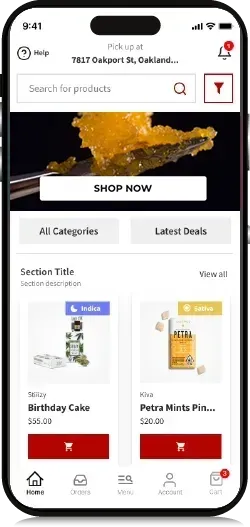
For example, check out this
and the
Plus, you can always ask the professionals (hint, that’s us) about what products could cause what effects.
It Depends on the Strain
Is marijuana a depressant? Or is marijuana a stimulant? The answer is both, as it can cause you to speed up in some ways and slow down in others, all depending on the cannabinoids and terpenes inside.
So if you’re looking for a specific kind of high, your best option is to do a little research followed by careful experiments. It’s for science, right?

By Angel Askam
•
December 8, 2025
Delivery and in-store shopping are the two main ways people in the Bay Area legally buy cannabis. Each has clear trade-offs in convenience, selection, price, and privacy. This guide walks through how delivery works, what to expect inside a dispensary, and which option fits common needs, whether you’re buying flower , cartridges, or edibles. We’ll compare ordering online and receiving a delivery with walking into a storefront and talking to a budtender, note California Department of Cannabis Control (DCC) rules and local differences across San Francisco, Oakland, and San Jose, and offer practical checklists for inspection, refunds, and deciding which channel to choose. Key Takeaways Weed delivery offers unmatched convenience and privacy for Bay Area shoppers who prefer online browsing and doorstep service. Dispensary visits provide hands-on inspection, instant purchase, and expert budtender guidance for personalized recommendations. Delivery suits buyers seeking discretion or time savings; in-store shopping is better for those who value quality checks and conversation. Always verify licenses and lab results under California DCC rules to ensure product safety and compliance. Compare all-in costs - taxes, delivery fees, and discounts - to decide which channel fits your needs and budget. What Are the Key Benefits and Drawbacks of Weed Delivery in the Bay Area? In the Bay Area, licensed cannabis delivery services take orders by phone or online and bring sealed, regulated products to your door within defined service areas and time windows. A verified order is routed to a licensed dispensary or courier, who confirms ID at handoff and follows local packaging and routing requirements. Delivery’s main advantages are convenience and discretion - no parking, no lines, and discreet packaging that reduces public exposure. Downsides include service-area limits, delivery fees and minimums, and the inability to physically inspect products before purchase. Those constraints affect whether delivery is the right choice for you. How Do Convenience and Privacy Make Weed Delivery Attractive? Delivery pairs online browsing with doorstep handoffs: you can compare menus and product pages from home and get same-day or scheduled service. That’s especially useful for people with limited mobility, tight schedules, or a strong preference for privacy. Discreet packaging and private delivery reduce public visibility, which matters in dense neighborhoods or for shoppers avoiding stigma. When using delivery, confirm the provider’s ID-check process, ask about tamper-evident packaging, and pick delivery windows that limit wait time, simple steps that protect quality while keeping things convenient. What Are the Common Challenges and Limitations of Cannabis Delivery? Delivery’s drawbacks tend to cluster around logistics, quality checks, and local rules. Some neighborhoods fall outside coverage zones or carry higher fees for longer distances, which can turn what looks like a convenient option into a costly one. Quality assurance is harder: buyers usually rely on photos, lab certificates, and reviews instead of touching or smelling products, and resolving disputes over freshness or defects can take longer. To reduce risk, ask for clear photos or lab-result snapshots before delivery, review return and refund policies, and combine items to meet minimums while lowering per-item delivery costs. For privacy-focused or time-pressed shoppers, delivery often makes sense. But because delivery limits hands-on inspection, it’s not always the best choice. What Should You Expect from the Bay Area Dispensary Shopping Experience?

By Angel Askam
•
November 26, 2025
Staying True to California’s Legacy Cultivation Traditions In an era where cannabis often feels industrialized and overly engineered, Burr’s Place stays rooted in the traditions that shaped California’s legacy cultivation culture. While massive indoor facilities chase yields and uniformity, this farm continues to grow cannabis the way it was always meant to be grown - outdoors, in the earth, under the sun, supported by living soil and a deep respect for the land. Their flower carries that story in every jar: the taste of real soil, the touch of real hands, and the spirit of a family that still works the land together. Why Sustainability Matters More Than Ever in Cannabis As consumers become more informed and more intentional about what they buy, sustainability has become more than a buzzword - it is an expectation. People want to know where their cannabis comes from, how it was grown, and whether the farm behind it operates with integrity. They want authenticity and transparency, but also a product that reflects care and craftsmanship. Burr’s Place has been living this philosophy long before it became a trend, proving that responsible cultivation isn’t a marketing tactic, it’s a way of life.